






Fuerteventura’s roads are straightforward compared to most European destinations. No complex city navigation, minimal traffic, and well-maintained highways make this island beginner-friendly for foreign drivers. Still, a few local quirks catch tourists off guard.
Road Quality and Types
The island has three main road categories. The FV-1 and FV-2 highways connect major towns with smooth asphalt and clear signage. Speed limits hit 120 km/h on some sections, though cameras enforce this strictly.
Secondary roads linking smaller villages maintain decent quality but narrow considerably. Two cars can pass, but not comfortably. Slow down when meeting oncoming traffic, especially around blind curves.
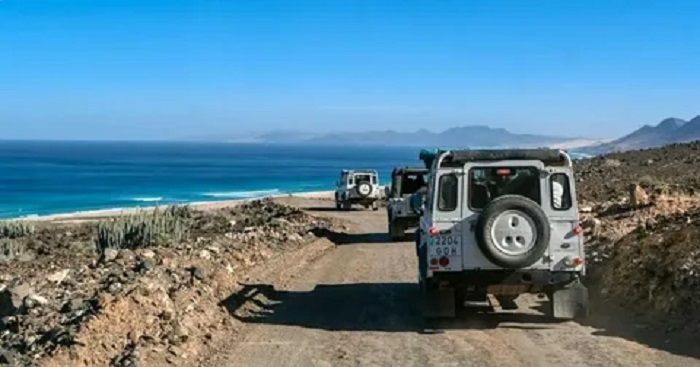
Dirt tracks lead to remote beaches and viewpoints. These range from well-graded gravel to rocky nightmare paths. A standard car handles most graded tracks fine. Seriously rough routes like the one to Cofete Beach need higher clearance.
Speed Limits and Enforcement
| Area Type | Speed Limit | Common Camera Locations | Fine Range |
|---|---|---|---|
| Urban zones | 50 km/h | Town entrances | 100-600 EUR |
| School zones | 20-30 km/h | Near schools (weekdays) | 100-600 EUR |
| Rural roads | 90 km/h | Random placement | 100-600 EUR |
| Highways | 120 km/h | FV-1, FV-2 corridors | 100-600 EUR |
Speed cameras operate frequently on the main FV-1 between Corralejo and Puerto del Rosario. They’re clearly marked with warning signs, but tourists still trigger them regularly. Rental companies will charge your card for fines plus a 30-50 EUR admin fee.
Navigation and Signage
Road signs use Spanish exclusively. Learn basic terms before driving:
- Salida = Exit
- Centro = Town center
- Playa = Beach
- Puerto = Port/Harbor
- Aeropuerto = Airport
- Gasolinera = Gas station
- Obras = Construction/Roadwork
Google Maps works reliably across the island. Download offline maps before leaving WiFi in case you lose signal in remote areas. GPS coordinates are more reliable than addresses for beach locations.
Roundabouts and Right of Way
Fuerteventura uses roundabouts extensively. Vehicles already in the circle have priority. Wait for a gap, then enter. Signal right when exiting, not when entering.
Multi-lane roundabouts appear in Puerto del Rosario and Corralejo. Stay in the outer lane if exiting at the first or second exit. Use inner lanes only for third exit or beyond.
At unmarked intersections, vehicles approaching from the right have priority. This catches many tourists who assume larger roads automatically have right of way.
Parking Rules and Costs
Most of Fuerteventura offers free parking. The exceptions are Corralejo town center and parts of Puerto del Rosario.
Blue lines indicate paid parking zones. Rates run 1-2 EUR per hour during enforcement hours (typically 9 AM to 8 PM, Monday to Saturday). Sundays and holidays are usually free.
Yellow lines mean no parking ever. White lines indicate free parking with no time limits. Green lines allow resident parking only.
Beach parking is free but fills quickly in summer. Arrive before 10 AM or after 4 PM for guaranteed spots at popular locations.
Fuel Stations and Costs
Gas stations cluster around major towns. Expect longer distances between stations in rural areas. Don’t let your tank drop below quarter full when exploring remote regions.
Diesel (gasoleo) costs about 1.35-1.45 EUR per liter. Petrol (gasolina) runs 1.45-1.55 EUR. Stations are self-service. Pay inside after pumping or use card payment at the pump.
Most stations accept cards, but some small rural stations prefer cash. Keep 40-50 EUR handy just in case.
Common Driving Mistakes
Tourists frequently make these errors:
- Stopping in the middle of roundabouts (keep moving unless traffic forces a stop)
- Driving too slowly on highways (minimum speeds apply, usually 60 km/h)
- Forgetting to signal lane changes
- Parking facing against traffic flow (always park in the direction of traffic)
- Using phone without hands-free (200 EUR fine)
- Not carrying required documents (license, insurance, rental agreement)
Weather Considerations
Wind affects driving more than rain in Fuerteventura. Strong gusts can push lighter cars sideways, especially on exposed coastal roads. Grip the wheel firmly and reduce speed in high wind.
Sand occasionally blows across roads near dune areas. This creates slippery conditions similar to ice. Brake gently and avoid sudden steering movements.
Rain is rare but creates hazardous conditions when it occurs. Dry roads accumulate oil and dust. First rainfall makes this mixture extremely slick. Drive cautiously during the first 30 minutes of any rain.
Local Driving Culture
Fuerteventura drivers are generally patient and courteous. They’ll let you merge, wave you through at confusing intersections, and rarely honk aggressively.
Flash your hazard lights briefly to say thank you when someone lets you in. This is standard local courtesy.
Don’t expect aggressive lane discipline. Cars switch lanes without much warning. Maintain following distance and stay alert.
Emergency Procedures
For accidents, call 112 (European emergency number). Police will attend even minor incidents if requested. Get a police report for insurance claims.
Breakdown assistance comes through your rental company. Save their emergency number in your phone before leaving the lot. Most provide 24/7 support.
Rental services like https://findycar.com/ offer vehicles without deposit requirements, and many include straightforward roadside assistance in their packages.
Keep the rental agreement and insurance documents in the car always. Police can request these during routine checks.
Documentation Requirements
You must carry:
- Valid driving license (EU licenses work directly, others need IDP)
- Rental agreement with your name
- Insurance certificate
- Passport or ID card
International Driving Permits (IDP) are technically required for non-EU licenses, though enforcement varies. Get one before traveling to avoid potential issues.
Night Driving
Rural roads lack street lighting. High beams help but dim them for oncoming traffic. Watch for cyclists and pedestrians who often wear dark clothing without reflectors.
Wildlife rarely crosses roads, but goats occasionally escape farms. They’re particularly active at dawn and dusk.
Some remote areas have no phone signal. Plan routes carefully and inform someone of your travel plans when driving at night in isolated regions.
Toll Roads and Fees
Fuerteventura has zero toll roads. All highways and main routes are completely free to use. This makes driving costs predictable, with fuel being your only variable expense.
Driving in Fuerteventura ranks among the easiest in Europe. Roads are quiet, rules are clear, and locals drive sensibly. Take your time, follow basic guidelines, and you’ll navigate the island without stress.