







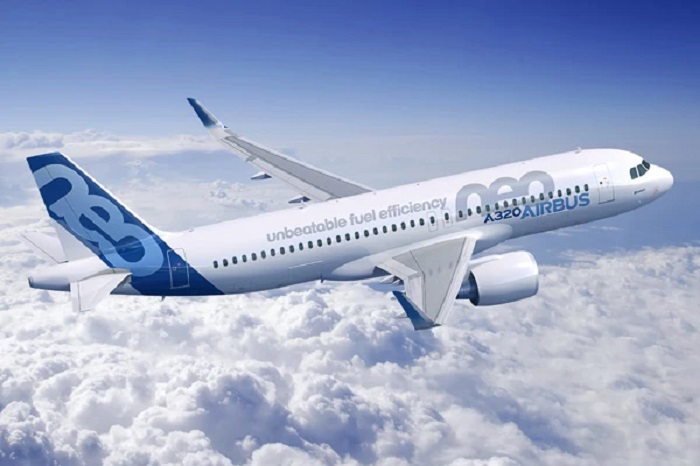
If the history of commercial aviation were written as a story of quiet revolutions, the Airbus A320 family would occupy an entire chapter on its own. Since the original A320 entered service in 1988, it fundamentally altered the narrowbody market, introduced fly-by-wire technology to short and medium-haul flying, and spawned a family of variants that collectively became the best-selling commercial aircraft program in history.
Within that family, no comparison generates more practical interest — from airlines, aviation professionals, and frequent flyers alike — than the one between the A320 and its stretched sibling, the A321. They share DNA, cockpit commonality, and a common type rating. Yet in terms of economics, route capability, and strategic role, they serve distinctly different purposes. A detailed visual and technical guide to spotting and understanding the differences between the two is available at airplane-trade.com/airbus-a321-vs-a320-comparing-two-aviation-icons — required reading for anyone who wants the full technical picture.
Here, we explore what makes each aircraft remarkable, why airlines choose one over the other, and how both continue to shape the future of short and medium-haul flying.
Origins: The Aircraft That Changed Everything
The Airbus A320 arrived on the scene as a genuine disruptor. At a time when Boeing’s 737 dominated the narrowbody market and Douglas held a share with the MD-80 series, the A320 introduced something neither competitor offered: full fly-by-wire flight controls, sidestick controllers replacing the traditional yoke, and a glass cockpit that redefined what a short-haul jet could be.
Airlines noticed immediately — not just for the technology, but for the economics. A common type rating across the entire A320 family meant pilots could transition between variants with minimal additional training, dramatically reducing crew costs for operators running mixed fleets. One certificate covered the A318, A319, A320, and A321. That single commercial advantage accelerated adoption across airlines worldwide and remains one of the program’s defining strengths to this day.
The A321 followed the A320 into service in 1994, stretching the fuselage by nearly seven meters to accommodate more passengers on the same efficient platform. What appeared to be a straightforward capacity increase turned out to be the foundation for one of commercial aviation’s most consequential aircraft variants — but more on that shortly.
Size, Capacity, and Cabin Differences
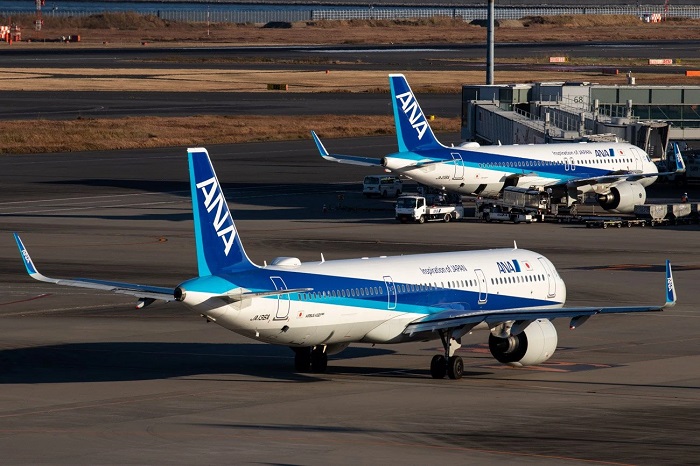
Place an A320 and an A321 side by side and the size difference is immediately apparent — the A321 is a noticeably longer aircraft. But the numbers tell the fuller story.
The A320, in standard single-class configuration, seats between 150 and 180 passengers in a 3-3 economy layout across a fuselage roughly 3.95 meters wide at the cabin. It is the workhorse of the narrowbody world — sized precisely for routes where demand is consistent but not sufficient to justify wide-body economics. Routes between major European city pairs, US domestic trunk routes, Middle Eastern inter-regional flying — the A320 fits the demand profile across all of them.
The A321 stretches that same cabin to accommodate between 180 and 220 passengers in standard configuration, with some high-density layouts pushing closer to 240 seats. Same cabin width, same cross-section, more rows. For airlines operating routes where the A320 regularly sells out, the A321 provides a natural capacity step-up without requiring a completely different aircraft type, crew qualification, or maintenance program.
The practical difference for passengers is largely a matter of fuselage length and, depending on the operator, seat pitch. The cabin experience is fundamentally similar — the same overhead bin dimensions, the same seat width, the same floor-level view from any row. What changes is the sheer number of rows, and on high-density carriers, the A321 can feel noticeably more crowded than the more modestly loaded A320.
Performance and Route Economics
The A320 and A321 are close in range, but not identical — and the differences matter significantly for route planning.
The standard A320 operates comfortably at ranges up to approximately 6,100 kilometers with full passenger load. That’s sufficient for most European intra-continental routes, US transcontinental flying, and medium-haul international operations. It’s an aircraft designed to turn around quickly, fly multiple sectors per day, and maximize utilization on routes where frequency matters as much as capacity.
The A321, carrying more passengers and consequently more weight, traded some range for capacity in its original configuration — operating closer to 5,900 kilometers at full load. For most airline applications, the difference is negligible. But for route planners working with thin margins and specific city pairs, it matters.
What changed the conversation entirely was the introduction of the A321neo — the new engine option variant featuring CFM LEAP-1A or Pratt & Whitney GTF engines — and most dramatically, the A321XLR. The XLR (Extra Long Range) variant, with its rear center fuel tank and aerodynamic refinements, extends range to approximately 8,700 kilometers. That is enough to fly transatlantic routes — New York to London, Boston to Madrid, Toronto to Lisbon — on a narrowbody aircraft for the first time in commercial aviation history.
The implications for airline economics are profound. Wide-body transatlantic routes require high load factors to break even. The A321XLR allows airlines to serve thinner transatlantic city pairs — markets that couldn’t fill a 787 or A330 profitably — with a narrowbody’s operating economics. It’s a transformation in what the narrowbody category can do, and it’s built on the A321’s stretched fuselage as its foundation.
Technology: Fly-By-Wire and the Airbus Philosophy
Both aircraft share the same fundamental fly-by-wire architecture that distinguished the original A320 from its competition in 1988. The sidestick replaces the traditional yoke. Flight envelope protection systems prevent pilots from exceeding structural and aerodynamic limits regardless of input. Normal law, alternate law, and direct law modes govern how the aircraft responds under different flight conditions.
For pilots, the commonality is a commercial reality that translates directly into roster flexibility and cost efficiency. An airline operating A320s and A321s can assign crew interchangeably without additional type ratings, a scheduling advantage that compounds across large fleets. For crews transitioning from the A320 to the A321XLR, differences are present — the XLR introduces new systems related to the additional fuel capacity and range — but the fundamental cockpit philosophy remains identical.
The neo variants of both aircraft added further technology upgrades: new-generation engines delivering 15–20% fuel burn improvements over the CEO (current engine option) variants, sharklet wingtip devices, and systems refinements that pushed the economics further in favor of the Airbus platform over competing designs.
How Airlines Choose Between Them
Fleet planning decisions between the A320 and A321 come down to a few core variables that any airline must weigh carefully.
Route demand and load factors. An airline consistently selling out A320 flights on a route has a straightforward case for upgrading to A321 capacity. An airline running A320s at 75% load across its network has little incentive to add seats it can’t fill.
Airport and slot constraints. At highly congested airports where slots are limited and gate assignments fixed, deploying larger aircraft on each slot maximizes revenue per operation. The A321 becomes compelling not as a capacity decision but as a slot efficiency decision — more passengers per departure when departures themselves are the scarce resource.
Range requirements. For operators exploring thin international routes, the A321LR and A321XLR variants open markets the A320 simply cannot reach. Airlines building transatlantic networks on narrowbody economics — Norse Atlantic, Iberia, American Airlines’ planned transatlantic expansion — are building their cases around the A321XLR’s range capability.
Fleet commonality. For carriers already operating A320s, adding A321s is the path of least resistance: shared simulators, shared spare parts inventory, interchangeable crew, and a single maintenance program. The incremental cost of adding the stretch variant is lower than almost any other capacity upgrade option available.
The Pre-Owned Market and Investment Perspective
For aircraft investors, lessors, and operators tracking the secondary market, the A320 family occupies a uniquely liquid position. The sheer scale of the installed base — thousands of aircraft in service globally across hundreds of operators — means there is always buyer and seller demand, always comparable transactions to benchmark against, and always a leasing market willing to place aircraft in new operations.
CEO variants of both the A320 and A321 are transitioning through their mid-life depreciation curves, creating opportunities for value-focused operators who can absorb slightly higher fuel costs in exchange for lower acquisition prices. Neo variants command premium values reflecting their operating economics advantage, but as the fleet ages and new deliveries accumulate, secondary market pricing will rationalize over the next decade.
For professionals tracking aircraft values, lease rates, and market availability across the A320 family and the broader commercial aviation landscape, Airplane-Trade.com provides the market intelligence, aircraft listings, and analytical perspective needed to make informed acquisition and investment decisions in one of aviation’s most dynamic segments.
Two Icons, One Legacy
The A320 and A321 are more than commercial aircraft. They are the physical expression of a philosophy — that aviation technology could be simultaneously safer, more efficient, more economical, and more pilot-friendly than what came before. That philosophy, introduced in 1988, has been validated by millions of flights, hundreds of operators, and the continued evolution of a family that shows no sign of reaching its ceiling.
Whether you’re an aviation enthusiast, a frequent flyer curious about what’s carrying you across the sky, an airline professional evaluating fleet options, or an investor tracking one of the most important asset classes in global transportation — understanding the difference between the A320 and the A321 is understanding a cornerstone of modern commercial aviation.